

Marketplace
-
€Industrial PCs
Industrial PCs are specifically designed for reliable use in machines, systems, and automated production environments. They perform tasks such as control, visualization, data acquisition, and industrial image processing, and are built for durability, continuous operation, and industrial interfaces. In this category, you’ll find industrial PCs for a variety of applications in automation, mechanical engineering, and robotics.
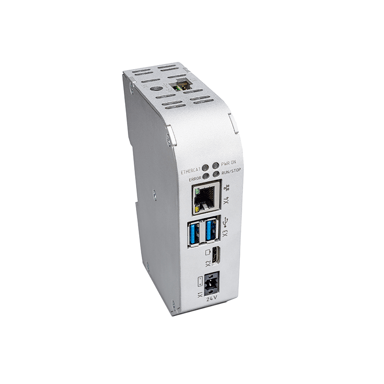
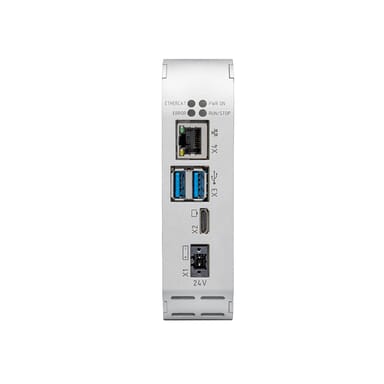
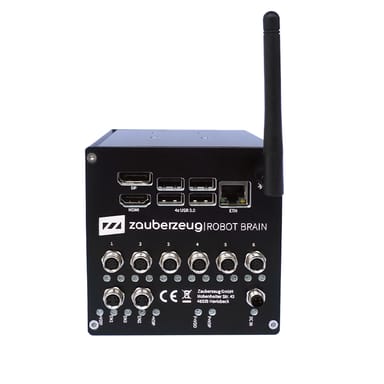
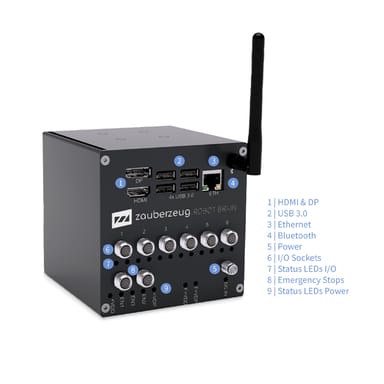


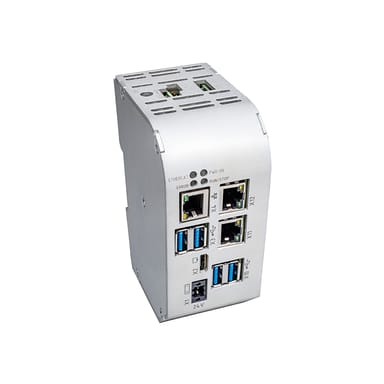
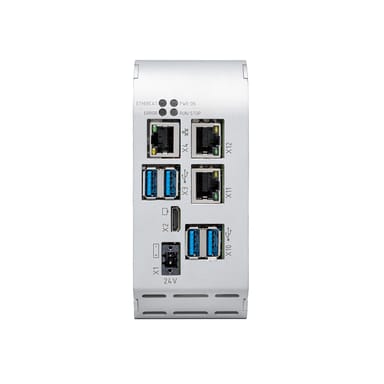
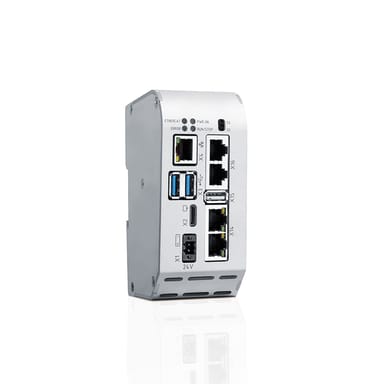
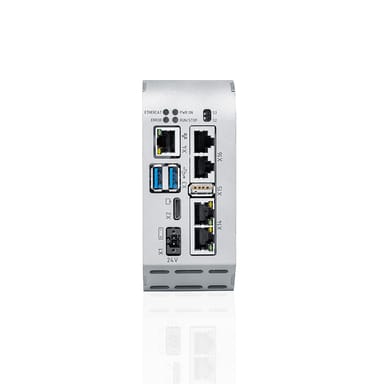
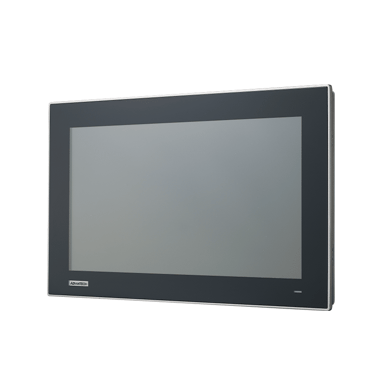
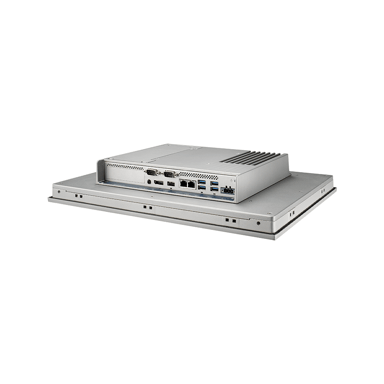
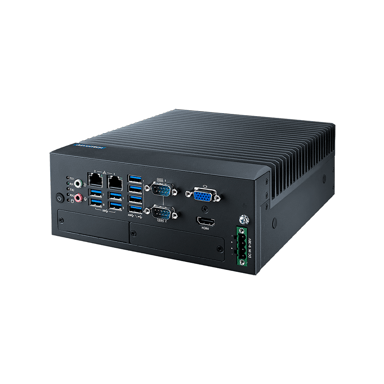
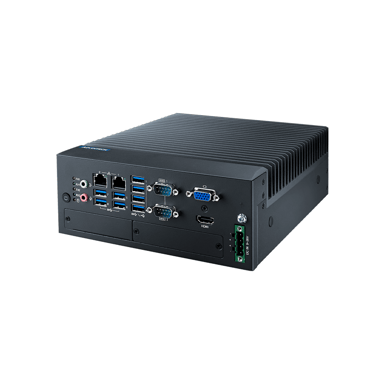
Industrial PCs for Automation, Mechanical Engineering, and Robotics
An industrial PC is a computer specifically designed for industrial use, intended to operate reliably in machines, systems, and automated processes. Unlike conventional office PCs, industrial PCs are designed for continuous operation, demanding environmental conditions, and integration into industrial systems. This is precisely why they are a key component of many applications in modern automation, mechanical engineering, and robotics.
Whether for machine control, process visualization, data acquisition, sensor integration, or industrial image processing: An industrial PC performs central tasks in many systems. It serves as a robust computing unit directly within the machine, in the control cabinet, or on the production line, ensuring that software, control systems, and communication work together reliably.
What is an industrial PC?
An industrial PC, often referred to as an IPC, is a computer specifically designed for industrial applications. It is engineered to function reliably even under challenging conditions, such as dust, vibrations, temperature fluctuations, or 24/7 operation. This distinguishes an IPC significantly from traditional standard office PCs.
In practice, an industrial PC is used wherever processes must not only be digitally supported but also directly integrated into machines or systems. It handles computational tasks, processes process data, and often serves as an interface between software, hardware, and the production environment.
What are industrial PCs used for?
Industrial PCs are used in many areas of industrial automation. Typical tasks include machine control, plant operation, process visualization, data acquisition, and communication with other systems. Industrial PCs also play an important role in robotics, image processing, and networked production environments.
Typical applications include:
- Machine and plant control
- HMI and process visualization
- Industrial data acquisition
- Image processing and camera systems
- Robotics applications
- Communication with sensors and peripherals
- Edge computing in production
Especially in automated environments, an industrial PC often serves as the link between the control level, software, and field devices.
What advantages does an industrial PC offer?
The major advantage of an industrial PC lies in its robust design for everyday industrial use. While standard PCs are typically designed for clean office environments, industrial PCs are engineered for reliability, durability, and stable performance in production environments.
Typical advantages include:
- reliable continuous operation
- robust construction for industrial environments
- high system stability
- flexible integration options
- industrial interfaces
- compact designs for machines and control cabinets
As a result, industrial PCs are particularly well-suited for applications where reliability and seamless integration into existing automation solutions are critical.
Industrial PCs in various configurations
Depending on the application, industrial PCs are available in different form factors. These include, for example, compact box PCs, control cabinet PCs, or variants for direct integration into machines and systems. In many cases, panel PCs are also part of the broader ecosystem of industrial computer systems when computing power and the user interface need to be combined in a single device.
Which model is best suited depends on the application’s requirements. Key factors include the installation location, space constraints, computing power, interfaces, and on-site environmental conditions.
In some applications, a particularly compact design is the priority; in others, connectivity, performance, or resilience take precedence.
Industrial PCs as Central Processing Units in Automation
In many automation solutions, the industrial PC plays a central role. It processes data, coordinates processes, and ensures that machines, sensors, cameras, or robotic systems communicate reliably with one another. As a result, the IPC is often not just an accessory but a central component of the entire system architecture.
Industrial PCs are gaining even greater importance, particularly in light of digitalization, networked production, and data-driven processes. They provide the technical foundation for processing, visualizing, and transmitting information directly at the machine.
Find the right industrial PC for your application
When selecting an industrial PC, you should focus primarily on the requirements of your application. Key criteria include computing power, form factor, interfaces, installation environment, and the operating conditions in industrial settings. The question of whether the IPC will be used for control, visualization, communication, or image processing also plays a significant role.
In this category, you’ll find industrial PCs for various requirements in automation, mechanical engineering, robotics, and industrial IT. Whether as a rugged computing unit for machines, an interface for networked processes, or the foundation for demanding automation applications: the right industrial PC is a key component for stable and future-proof systems.
Find your automation solution now with our configurator
